
Airy Plant Review: What I Can Actually Observe – and What I Can't
A plant cleans your indoor air – that is, first of all, just a claim. The Airy Box stood next to my bed for three months. Here's what I genuinely noticed, what I can't prove, and what the planter costs.
Advertisement — I may earn a commission if you buy through links here; this is still my honest experience.
 By Clara Voß ·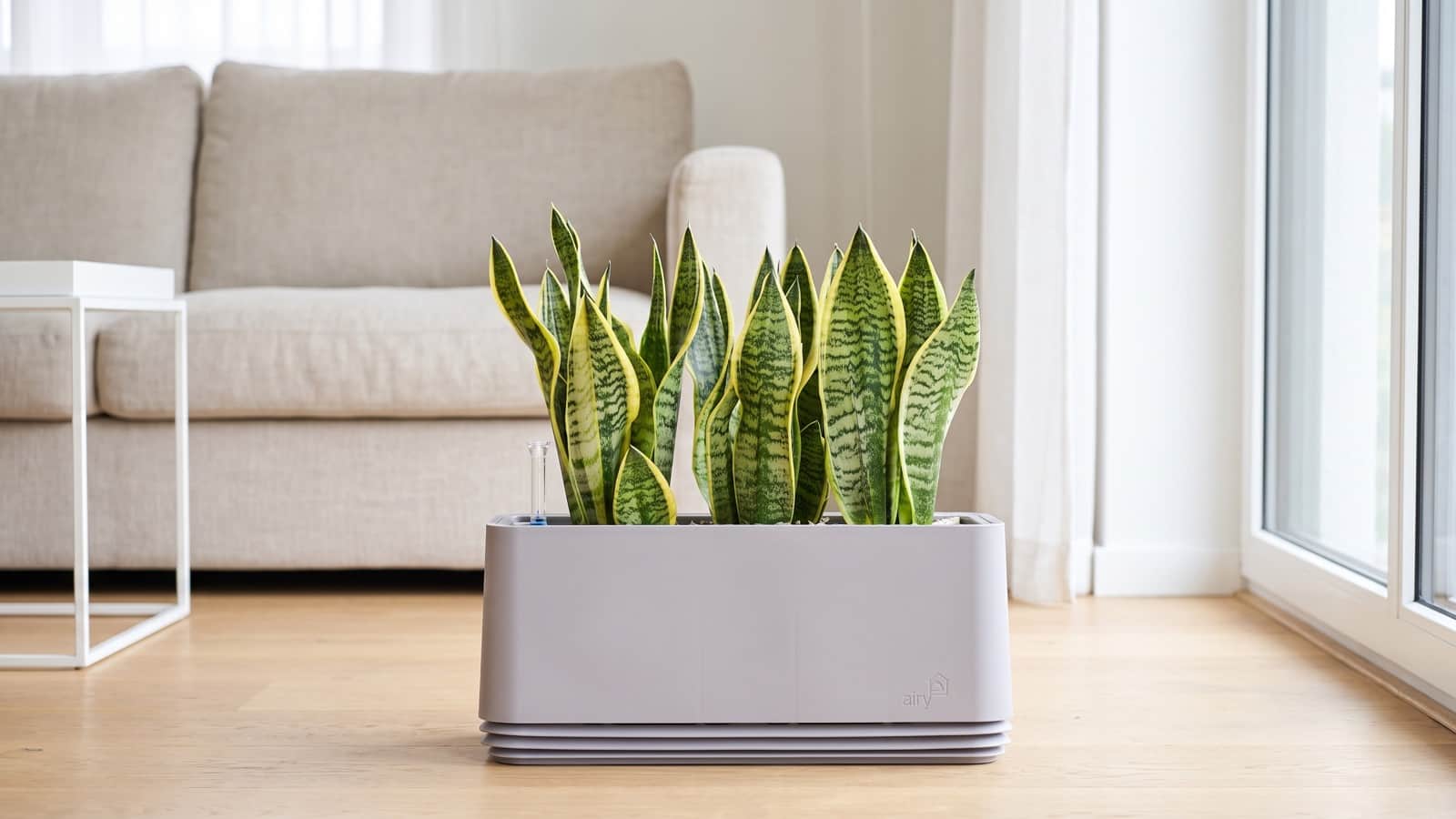
A plant cleans your indoor air. In one form or another that line sits behind everything written about air purifying plants, and it sounds lovely. It is also, first of all, just a line. A claim that nobody has checked in my bedroom on my behalf.
I bought the Airy plant anyway, because stale morning air had been getting on my nerves for two winters. The planter has now stood beside my bed for a good three months, and this is my attempt to hold that claim up against what I can actually see, smell and add up in a third-floor flat in Leipzig – including the point where my judgement simply runs out.
If you're looking at air purifying plants because your home feels stuffy in winter no matter how often you open the windows, I had the same question you probably have. Not "which plant is best", but "is there anything to this at all".
What is actually being promised
Before I can judge whether something holds up, I have to write down plainly what is being claimed. With the Airy Box it comes down to three things:
- The planter pulls room air downwards through the plant's root zone, instead of letting it drift past the leaves up top.
- Around the roots and in the substrate sit microorganisms that are meant to break down pollutants – that, according to the maker, is where the actual cleaning happens.
- And all of it without electricity, without a fan, and without a filter you have to keep replacing.
The core of that idea didn't reach me through an ad but from a friend over coffee. She said something I'd never heard before: a plant cleans mainly through its roots and its soil, not its leaves – and the real problem is that hardly any room air ever gets down there.
A plant can only clean what it actually reaches – and most of that happens down at the roots, not up top at the leaves.
That's a tidy explanation for why my spider plant sat on the windowsill for years without me ever noticing a thing in the room: its roots never saw any airflow. But tidy is not the same as proven. A good story about roots is no evidence that anything measurable is happening in my bedroom.
What I genuinely noticed in the room
I ordered the anthracite-grey model and put a golden pothos in it from the garden centre round the corner – tough, low-maintenance, forgives almost anything. Setup took a few minutes: plant in, fill the water reservoir, done. No cable, no filter, no sound. Since then I top the water up every week or two, and that's the whole of the care.
The planter sits in the bedroom, right next to the bed. For the first week I was honestly skeptical. I'd sniff the air deliberately in the morning and mostly think: am I imagining this?
After a week or two I noticed for the first time that my first breath of the day felt less stale. Nothing spectacular – more as if someone had tilted the window open a crack, only permanently and without the draught. Before that the room always smelled slightly close in the mornings: third floor, heating on half the day in winter, windows facing the street, and with the noise and traffic dust I don't throw them wide open for hours.
The most concrete thing I can name
One Sunday morning I was still in bed and realised I'd forgotten to open the window the night before – and that it didn't bother me. No reach for the handle, no first stuffy breath. That isn't a reading off an instrument, but it is at least something concrete: a habit that quietly dropped away. A good three months on, the impression still holds.
What I can't prove
And this is where my judgement stops. I set up no sensors, I have no before-and-after values, no number for fine dust, CO2 or volatile compounds. I'm describing what I smell in the mornings, nothing more. Anyone expecting a study won't get one from me.
On top of that there are at least three explanations I can't rule out:
- Getting used to it. When you've spent that kind of money on a plant pot, you want to notice a difference – and that works on you.
- The season. The heating months ended while the planter stood there: warmer days, different airing habits.
- The plant itself. A healthy pothos gives off moisture. Some of what I noticed might have come from the same plant in an ordinary pot.
What's left is a subjective impression that stayed steady across three months. For a buying decision that isn't nothing – but it also isn't what the phrase "air purification" suggests.
What the planter is actually good for in my flat
Soberly put, the Airy Box isn't a cleaning device in my home; it's an answer to one very specific problem: a room I can't air out at night and don't want to fill with a whirring machine. It's silent, it needs no power, it has no filter to swap, and it looks like a piece of furniture rather than an appliance.
For exactly that case – bedroom, street-facing, winter – I rate it. It didn't "purify" my air; it took the morning window-opening off my list. That's a smaller promise than the one on the packaging, but it's one I can see being kept.
And what it isn't good for
If you need guaranteed, measurable cleaning against allergens or specific pollutants – because of an allergy or a health condition, say – this is the wrong route. That's what certified HEPA-filter devices are for, and they work measurably and fast. I can't and won't promise it here.
The effect is also subtle rather than dramatic. There's no before-and-after like throwing the windows open in spring, no aha-moment. If you're hoping for a clear, obvious swing, you'll probably be disappointed.
And the planter takes no care off your hands. You still need a suitable plant, you still have to water it and give it light. A dead planter cleans nothing. If plants aren't your thing at all, this won't make you happy.
The price, measured against an ordinary pot
Around 99 euros for the planter. That's the point where most people hesitate, and I hesitated for a couple of days too. For the same money you'd otherwise get a whole stack of ordinary pots, and at first glance what you're holding is exactly that: a plant pot.
On top of that, the planter alone does nothing. You buy a plant as well and you take on the small, permanent bit of care. The premium pays for a construction you can't see: the airflow routed downwards. Which is why, with this product, the price question isn't really a price question. If you don't find the principle plausible, no discount will ever make the premium feel justified.
I found it plausible enough to try, after two winters of being annoyed by it every single morning. If stale air only crosses your mind now and then, I'd keep the money.
What survives of the claim
The big claim – "a plant cleans your indoor air" – I can't confirm. I measured nothing, so I won't be telling anyone my bedroom is demonstrably cleaner than it was.
What I can confirm is the smaller version of it: for a good three months now my first breath of the morning has felt less stale, reliably, in a room I can't air out at night – with no power, no noise and no filter changes. For me that was worth the premium.
If you need a provable effect, buy a certified device. If you already like a bit of green in the room and stale morning air bothers you daily, this is the quietest experiment I know – with the caveat that in the end you'll have exactly what I have as evidence: your own nose.
Frequently asked questions about Airy
How is the Airy plant supposed to clean the air?
The Airy Box draws room air downwards through your houseplant's root zone, where microorganisms around the roots are meant to break down pollutants. The difference from a normal pot is precisely that airflow – my old spider plant sat on the windowsill for years without a breath of room air ever reaching its roots.
How long before I noticed anything?
For me it took roughly two to three weeks for the pothos to settle in and the morning air to feel fresher. Nothing happens overnight – the impression builds slowly and then stays, rather than arriving with a bang.
Is the premium over an ordinary planter justified?
That depends entirely on how much stale air bothers you. For a plain pot it's a lot of money. For me, someone who felt it every single morning, it paid off; if the subject only concerns you in passing, I'd hesitate.
Which plant fits in the Airy Box?
I went with a golden pothos because it's tough and forgives almost anything. Plenty of classic houseplants work in principle; more important than the species is that the plant is healthy and reasonably strong – the more active root mass, the more surface for the airflow.
What downsides should I know about first?
Three honest ones: the price is far above a normal pot, the effect is subtle rather than dramatic, and it takes no care off your hands – you need the right plant and you have to keep it alive. For a heavily polluted room or acute health problems, it's the wrong approach.
Does the Airy replace an electric air purifier?
No, and I wouldn't promise anyone that. A device with a HEPA filter works measurably and quickly against fine dust and allergens. The Airy is quiet, electricity-free and subtle – an addition, not a substitute for a certified device when it matters medically.
Where did I order mine and how do I get started?
I ordered my Airy Box straight from the Airy website, where the system comes with the matching accessories. Getting started is simple: put a healthy houseplant in, fill the water reservoir, and place the planter where you spend the most time – for me, the bedroom, right next to the bed.
Reader experiences
CommentFranziska B. · May 2026
The effect is subtle, no miracle purifier. But the plant thrives in the pot and the corner feels fresher. For me it's mostly decor with a small bonus.
Stefan H. · April 2026
Clearly pricier than a normal pot. I can't measure whether the air is really better – but a plant certainly doesn't hurt.
You might also like

Standing Desk for Back Pain: What Actually Helped After Six Weeks of Home Office
For two years my back won every afternoon in the home office. Here is what a height-adjustable standing desk for around 380 euros changed for me – and, honestly, what it didn't.

Emma One Review: How I Chose It – and How It Held Up
Eleven tabs, eleven near-identical mattresses. My honest Emma One review: the three criteria I finally decided on, and what's left of it three months later.

KERAZUL Keratin Treatment: My Honest 3-Month Test (Before & After)
On forums and TikTok, KERAZUL is talked about as a secret weapon against frizz. I tested the complete set — treatment plus AfterCare, so it lasts longer. The starter set with the treatment also works; AfterCare alone does not replace it. Here's my honest before-and-after, including the things that annoyed me.