
Qi Blanco Reviews: Two Months of a Sceptic's Self-Experiment
I think this entire product category is nonsense – and yet a disc has been sitting next to my router since winter. My Qi Blanco reviews written as a protocol: expectation, setup, the drawer test, and what honestly survives it.
Advertisement — I may earn a commission if you buy through links here; this is still my honest experience.
 By Tobias Reinhardt ·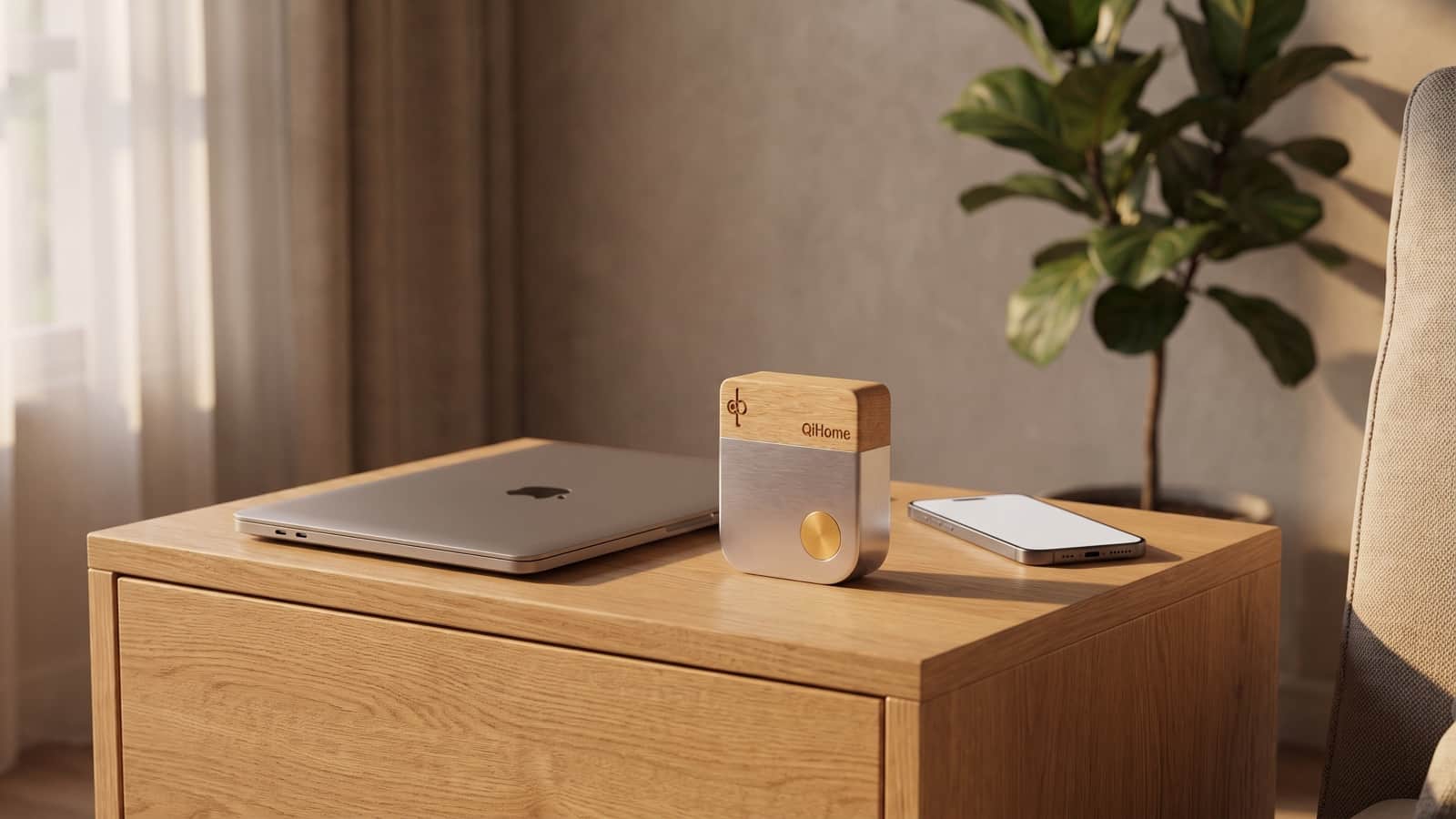
I think this entire product category is nonsense. Devices meant to 'harmonise' electrosmog – no power, no reading on any meter, no mechanism anyone has ever managed to explain to me. Other people buy that sort of thing. And yet a small white disc has been sitting between my router and my monitor since winter, and for two months I kept notes on what it does to my evenings.
If you're searching for Qi Blanco reviews right now, you're probably in a similar spot: surrounded by devices all day, wired instead of tired by night, and somewhere at the back of your mind the quiet suspicion that this doesn't just pass you by. What follows isn't a review in the usual sense. It's a protocol: what I expected, how I tested it, what I can claim afterwards – and what I explicitly can't.
Starting point: eleven hours a day inside my own wireless network
My workspace is a desk in the living room of a flat in Stuttgart, less than two metres from the WiFi router. Next to it the phone, the tablet, the headphones, all on charge. I build software from home and spend ten or eleven hours a day inside this little tangle of cables and signals. For years it was a non-issue – until it became one in the evenings.
From around autumn 2025 I stopped being able to wind down at night. A faint hum in my head, a restlessness that wouldn't let go. I'd lie in bed with the phone still warm beside me, staring at the ceiling – some nights well past one, even though the alarm went at six. Nothing dramatic. Just a little more drained each evening than the one before.
I'd already tried a few things. Most of them didn't stick:
- Scheduling the router to shut off overnight: technically clean, but I kept switching it back on because there was always one more thing to finish.
- Banning the phone from the bedroom: lasted two weeks, then it was back on the nightstand.
- An expensive sleep app with nature sounds: lovely noises, no effect whatsoever on the restlessness in my head.
At some point I was close to just living with it. Then a colleague mentioned, half-joking on a call, that he had one of these things next to his router and slept better. I laughed. Two days later I was sitting up awake again, thinking: what do I actually stand to lose here besides my pride and a bit of money?
Expectation before the test: nothing, absolutely nothing
This belongs at the front, otherwise it doesn't count later: I'm the engineer type. I know how WiFi works, and I know there is no proof of effect for these harmonisers. My prediction was zero. While ordering it I genuinely assumed this piece would end up being a takedown, and I was fairly confident I'd be right.
The price still made me swallow. A single Qi Blanco, the basic version in white, cost me around 120 euros, ordered straight from the maker's own site. For a palm-sized disc of plastic and metal that is a lot of money – I thought so as I clicked 'buy' and I still think so. I hesitated for a few days beforehand.
What arrived was exactly what I'd pictured: a small, matte, white disc, palm-sized, feather-light, pleasantly cool in the hand, with a circular pattern embossed in the middle. No cable, no button, no power, and no instructions that explained anything. First thought: 'That much money for this?' Second thought: 'Well, it's here now, so at least do it properly.'
I didn't believe in the thing. I only decided to look honestly at what happened – and what didn't.
The setup: where the disc sat and what I watched for
During the day the disc went on the desk, between the router and the monitor, which is precisely where I sit. In the evenings I sometimes carried it to the nightstand, next to the phone. No ritual, no incense, no 'charging' it up. Put it down and get on with life.
I gave myself one rule: change nothing else. Same working hours, same screens, same bedtime, no new app, no new tea. Shift three things at once and you can't attribute anything afterwards. What I watched was deliberately mundane: how long I lay awake, how often I reached for the phone on reflex in the evening, and whether that hum in my head was there or not.
Week one: nothing. Genuinely nothing. I was almost relieved, because it confirmed what I'd predicted.
Weeks two and three: the first deviation
Somewhere in the second or third week I noticed I was calmer in the evenings. Not 'healed', not 'radiation-free'. Just less of that hum. I reached for the phone automatically less often and fell asleep a few minutes faster. Tiny things, each one below the threshold of what you'd notice on its own. Added together, a different evening.
That is exactly the point where I started distrusting myself. Spend that kind of money and then look for an effect every day, and you will find one. That's not a dig at anyone else, it's the standard trap, and I was sitting in the middle of it. So I needed a test I couldn't steer.
The drawer test
I put the Qi Blanco away for a full week, into a drawer in the hallway, and I did it deliberately on a day when I hadn't been thinking about it – in passing one morning, without announcing it to myself. If the effect is real, I reasoned, the restlessness should come back without me waiting for it.
The result was uncomfortably honest: I couldn't detect any clear difference. One night I slept worse, the rest were perfectly ordinary. No slide back into autumn, no returning restlessness, nothing I could sell you as evidence.
That settles the important question for me. I can't show you that the disc does anything to the radiation in my flat. Honestly, I still don't believe it does. Whatever is working here plays out largely in my own head, and after that week I had to admit it to myself.
What I can claim – and what I can't
- I can claim this: my evenings are calmer than they were in autumn. I lie awake for less time and reach for the phone on reflex less often. Over two months that stops being noise and starts being my normal day.
- I can't claim this: that any measurable value in my flat has changed. I never measured one, and I don't believe one would have moved.
- I can't cleanly separate this: whether the disc does something, or whether it simply reminds me daily to be more deliberate with my devices. Both end in the same calmer evening, but they are not the same thing.
There's one evening that stands in for the whole experiment in my memory. I was at the kitchen table with my girlfriend, we talked and drank wine, the phone lying face down somewhere in the kitchen. At some point I realised I hadn't reached for it in two hours and hadn't missed it once. No fireworks. Just calm – exactly the calm I'd been missing for months.
An evening like that is a lovely experience and a terrible piece of evidence. It is both at once, and I'm not going to hide either half from you.
Why this proves nothing scientifically
So nobody takes the wrong thing away: what's above isn't a study, it's an anecdote with a calendar attached. I am a single person. There was no control group, no blinding, and no stretch of time where I didn't know whether the thing was there or not. Even during the drawer week, I knew I'd put it away.
On top of that: there is no scientific evidence that Qi Blanco reduces or 'harmonises' radiation. No meter in the world will confirm that your WiFi changes because of this disc. Anyone telling you otherwise is selling you something.
Every effect I describe is subjective and could be pure placebo. My own drawer test pointed straight at that. I'm reporting a feeling, not an effect – and that distinction matters more to me than a good story.
Who should stay away from it
Plainly first: for what it physically is – a palm-sized piece of material with no power – Qi Blanco is expensive. You have to want to and be able to afford it, and nobody should be doing sums about their month because of it.
If you need measurable proof in order to sleep easy, skip it. You'll feel cheated, and you'd be right to, because that proof doesn't exist. A year ago I'd have put myself firmly in that group.
And if you have a genuine health problem – persistent insomnia, headaches, anything that's really weighing on you – that belongs with a doctor, not next to the router. A white disc is not a substitute for getting it looked at, and I'd feel bad if anyone read this piece any other way.
What's left after two months
Would I spend the money again? For me: yes – but with a reason that's more honest than the marketing. Not because the disc reduces my radiation; as far as I know, it doesn't. Because in a far too connected daily life it has become a quiet anchor that gave me my evenings back. Those two months were worth the price to me.
If that appeals to you, if you're curious and the price won't hurt, a try can be worth it – just go in with open eyes and no promises of a cure, the way I did. If you need proof, keep your money. After two months, that's as honest as I can put it.
Frequently asked questions about Qi Blanco
What is Qi Blanco, really?
A small, palm-sized object with no power source that, according to the maker, is meant to 'harmonise' the electrosmog around your router, phone and so on. In my experience it's mostly a quiet object you set down next to your tech – what is supposed to happen on a physical level, nobody has yet explained to me in a way that adds up.
Does Qi Blanco really reduce radiation?
From my experience and everything I know technically: no, at least not measurably. I've never seen a meter show a change, and I explicitly make you no such promise. All I can report is a subjective feeling of more calm.
Is the effect ultimately just placebo?
Quite possibly. When I put the Qi Blanco in a drawer for a week I couldn't detect any clear difference. To me that means much of this plays out in the head. It doesn't make the feeling of calm worthless, but you have to name it honestly.
What did Qi Blanco cost and is it worth it?
I paid around 120 euros for the basic version, and for a piece of material with no power that is objectively a lot. Whether it's worth it depends on how much a calmer feeling at home means to you – for me it paid off after two months, for a pure rationalist probably never.
Where's the best place to put Qi Blanco?
During the day I kept the disc on the desk between the router and the monitor, and in the evenings I sometimes took it to the nightstand next to the phone. There's not much you can get wrong – it needs no power, no setup, no maintenance.
When did you notice a difference?
In the first week, nothing at all. Only around the second or third week did my evenings get noticeably calmer. Elsewhere you'll read 'instantly' and you'll read 'nothing at all' – so count on weeks rather than days, if anything happens for you at all.
Who is Qi Blanco not for?
For anyone who needs scientific proof, for people who find the price too steep for a feeling, and for anyone with a real health problem – that belongs with a doctor, not with a harmoniser. If you're open, curious and feel stressed by your own tech, you can give it a go.
Reader experiences
CommentAndreas W. · March 2026
I'm just as sceptical as you. I can't prove anything, but since the device sits next to the router I at least imagine I'm a bit calmer in the evening. Maybe placebo – fine by me.
Katrin H. · April 2026
Honestly I found it too expensive for what it is. But I appreciate your sober tone – most write-ups on this are pure advertising.
You might also like
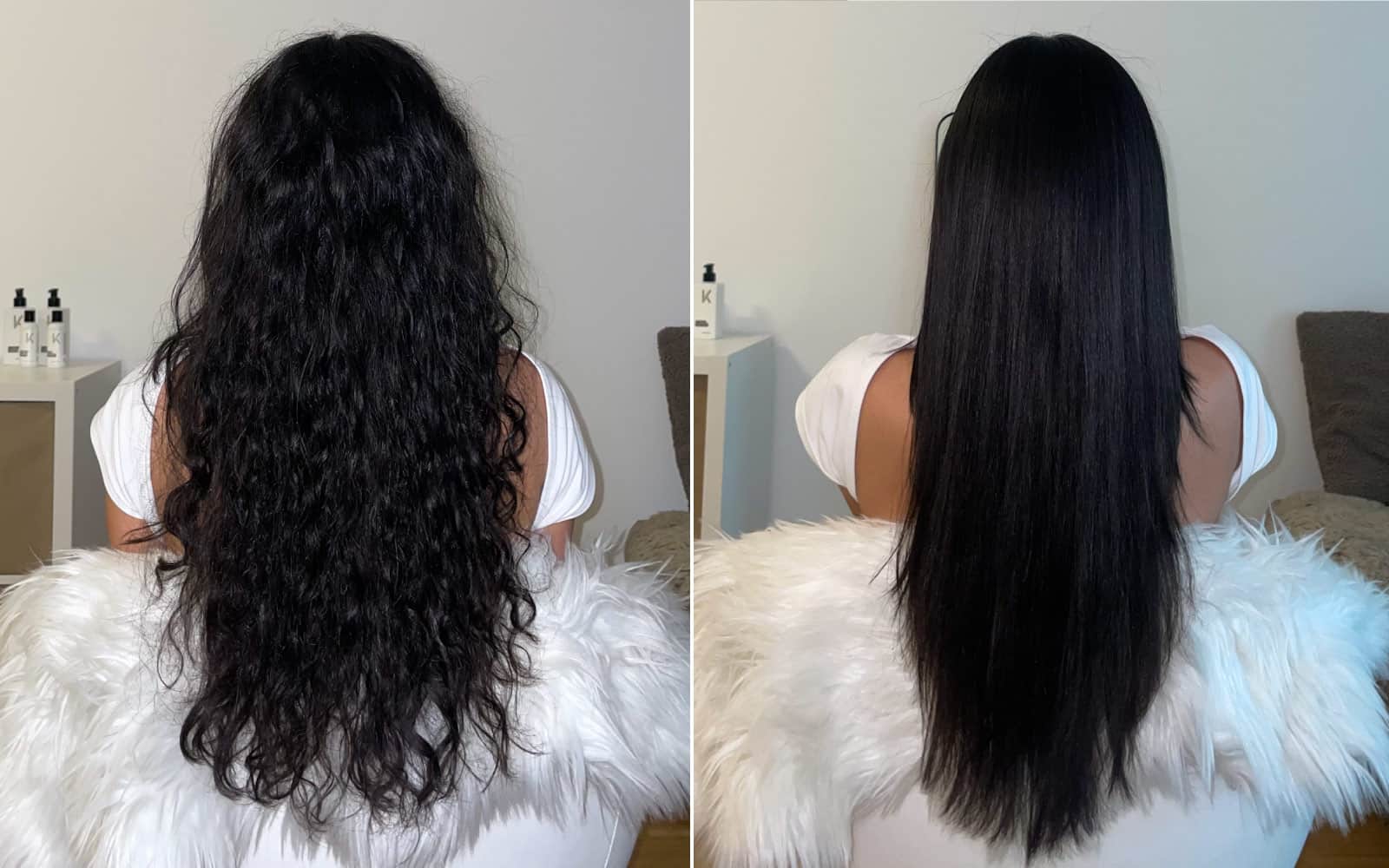
KERAZUL Keratin Treatment: My Honest 3-Month Test (Before & After)
On forums and TikTok, KERAZUL is talked about as a secret weapon against frizz. I tested the complete set — treatment plus AfterCare, so it lasts longer. The starter set with the treatment also works; AfterCare alone does not replace it. Here's my honest before-and-after, including the things that annoyed me.

Redken Yellow Shampoo and Shades EQ: How I Fixed My Brassy Hair
My balayage blonde turned brassy yellow after weeks – and I had helped it along. My honest experience: four mistakes I made before a Redken Shades EQ gloss and the violet Blondage purple shampoo finally pulled the yellow out.

AG1 Review: What I Actually Got for the Money
About 99 euros a month for green powder – that was exactly why I said no for years. My honest AG1 review after six weeks: what I dropped to pay for it, what changed, and what the cup really costs per morning.