
Epigenics Review: What I Can Honestly Credit the Capsules For – and What I Can't
An honest Epigenics review that starts with an admission: I changed four things at once. What shifted over three months – and what I still refuse to credit the capsule for.
Advertisement — I may earn a commission if you buy through links here; this is still my honest experience.
 By Julian Roth ·
I have to open with an admission, otherwise the rest of this is worthless: over the same three months, I changed four things. The capsule, my sleep, my water, my weekday drinking. Anyone who turns that kind of mess into a clean result is selling you something.
What I can say: I've been taking Epigenics for a good three months, one capsule with breakfast, around 50 euros a month on subscription. Something shifted – the afternoons first, my skin much later. What I can't say is how much of that belongs to the capsule. If you came looking for an honest Epigenics review, that blurriness is the review.
Why I started in the first place
From the outside it was skin that simply looked grey. Small unevenness on my cheeks, no glow, no matter how early I'd got to bed. I sit in an office in Frankfurt in front of a screen all day and barely see daylight in winter – and it shows on me. Every time I saw a photo of myself I'd think: I don't actually feel as tired as that.
From the inside it was worse. That hole around three in the afternoon where my focus fell off a cliff and I dragged myself through the rest of the day. The same crash, every day. And underneath it the question you eventually ask yourself quietly, once your own photos stop looking the way they used to: am I just getting older, or am I letting myself go?
I'd tried things before. An expensive face cream from the department store that felt lovely and did nothing for the tiredness in my skin. A random supermarket multivitamin I never once noticed doing anything. More coffee, which bought an hour and then handed the crash back harder. And pure willpower, earlier bedtimes – that lasted exactly three days.
What eventually pushed me toward a capsule was something a friend said over a beer: skin is an organ. What you put on it is one thing, what comes from the inside is another. I'd only ever worked from the outside. That's exactly what Epigenics is built for – a daily capsule for men whose skin and energy are running flat. Not a cure, more a missing piece in a routine that was overdue anyway.
The four things I changed at the same time
This is where the test falls apart, and I'd rather write it down myself than quietly leave it out. I didn't change one variable. I changed four:
- The capsule: one a day, always with breakfast, parked next to the coffee cup so I wouldn't forget it. Small, nearly odourless, a shade bigger than the supermarket multivitamins I used to take.
- Water: a big bottle on the desk that was supposed to be empty by the end of the working day. Before that I drank almost nothing but coffee.
- Sleep: a roughly fixed window before midnight, instead of episodes until half past one.
- Alcohol: no beer on weeknights. Before that it was two or three evenings a week, without me ever registering it as a quantity.
Every single one of those four is, on its own, a perfectly good explanation for why I looked more awake in spring than I did in February. I did it that way anyway, because I'm living my life, not running a study. I just can't tell myself afterwards that I tested a capsule.
I changed four things at once. Whatever got better belongs, for now, to all four of them.
What I noticed, and in what order
The order is the only piece of evidence I actually have. So I'm writing it out as precisely as I remember it, in weeks rather than in feelings.
Weeks one and two: nothing
Nothing visible at all. Honestly, after two weeks my finger was already hovering over the cancel button: another month billed for a tub of capsules that apparently did nothing. I gave myself one month's grace. Just one.
From week three: the afternoon
In week three I noticed for the first time that the afternoon hole was getting shallower. Not a surge of energy, nothing dramatic – more the absence of the crash. I sat at my desk waiting for it, and it didn't arrive with the old force.
Around month two: the skin
The skin part turned up much later. In the mornings my face looked a touch less grey, a shade more even, my cheeks not quite so dull. Nothing anyone would spot in a photo. But I see that face every morning and I know what its baseline looks like.
The only outside signal came from a colleague I see every few weeks: "Were you away somewhere? You seem more awake lately." Not a word about my skin. But someone who knew nothing about the four changes had noticed something.
What I won't credit the capsules for
The afternoon, mostly. If you go from almost nothing but coffee to a big bottle of water a day and drop the weeknight beer, your afternoons improve – that needs no capsule to explain it. The timing lines up neatly with the water and the alcohol too, both changes that work fast.
The sleep, obviously not. I went to bed earlier, so I slept more. That isn't an effect, that's arithmetic.
And some of it I put down simply to the fact that I was doing something at all. A man who lays a capsule next to his cup every morning tends to look after himself a bit more in other ways too. I can't subtract that, and I'm not going to pretend I can.
On the skin I'm less sure than I'd like to be, for a reason I nearly missed: I started in February and took stock in May. More daylight, no more radiator air, more time outdoors. My skin looks better every spring than it does in February. Without a photo from the previous year, I can't rule that out.
Where the attribution holds up best
Two things argue that the capsule wasn't just along for the ride. First, the delay: water, sleep and alcohol all changed in the very same first week. The afternoon responded after three weeks; the skin took about two months. That long gap sits badly with water and sleep, and better with something that builds up over weeks.
Second, an accident I hadn't planned. Halfway through the second month I was away for eight days and had left the tub at home. Water and sleep held up more or less, and so did the no-beer rule. In the back half of that week the afternoons got heavy again. That isn't proof, it's one observation on one person who happened to be travelling at the time. It's all I've got, and I'm not claiming more.
Who I'd tell not to bother
If you want an overnight effect, skip it. Nothing visible happens in the first weeks, and that isn't a teething problem, it's the normal case.
If you'd take it three times a week instead of daily, skip it too. At this price you don't want a half-full tub sitting in a drawer, and without consistency you can't judge anything afterwards – not even as vaguely as I can.
And if your sleep and water are a complete mess, start there, if only for financial reasons. No capsule offsets four hours of sleep. For me it was the combination that moved anything; the supplement on its own I'd probably never have noticed.
And if your fatigue or your skin problems could have a real underlying cause, that belongs with a doctor. A dietary supplement is not a check-up and doesn't replace one.
What it keeps costing
It's a subscription, which means the monthly charge keeps ticking whether you think about it or not. For a dietary supplement that's not pocket change, and across three months it adds up noticeably. More than once I wondered whether I seriously wanted to keep it running.
There's a second cost people forget to count: you can't try it cheaply. Judging it honestly takes roughly three months – that's the real stake, not the monthly figure. And in the first weeks you're guaranteed to be paying for nothing you can see.
What's left after three months
I stayed on it. Not because I could prove it was the capsule – this whole piece says the opposite – but because the package as a whole works and I have no appetite for removing the one part whose effect I'm least able to judge. That's a convenient justification. It also happens to be my real one.
My skin isn't flawless and the afternoon isn't effortless. Both are better than in February, and the new normal is so unremarkable that I trust it more than I'd trust a before-and-after picture. If dull skin and flat afternoons grind on you the way they ground on me, give yourself the same three months. If you genuinely want to know what the capsule does, change as little else as possible while you do it – or change everything and accept that you won't be able to pull it apart afterwards, the way I can't.
And to be clear once more, for safety's sake: Epigenics is a dietary supplement, not a medication. It cures nothing and promises no cure. If you take medication, have health concerns, or are unsure, talk to your doctor first.
Frequently asked questions about Epigenics
How does Epigenics actually work?
The way I understood it, Epigenics targets the nutrients your skin and energy levels use up every day, rather than one magic ingredient. In my experience you notice a difference mainly if you had a gap in those basics to begin with – the way I did.
How long did it take before anything happened for you?
Visibly nothing in the first few weeks. After that the afternoon flattened out, and my skin only followed after about two months. So count in months rather than days – skin simply needs time to renew itself.
Can you say for certain the effect came from the capsule?
No, and that's the most honest sentence in this article. I was also drinking more water, sleeping earlier and skipping weeknight alcohol. All that argues for the capsule is the sequence in time, plus one week without the tub in which the afternoons got heavy again. That's an indication, not a proof.
What bothered you most about Epigenics?
The price, clearly. The subscription adds up month after month, and in the first weeks you pay without seeing anything. I came close to cancelling. The only reason I stayed is that something genuinely did turn up afterwards.
Is Epigenics safe, or are there downsides?
It's a dietary supplement, not a medication, and I had no problems at all with it. Even so: if you take medication, have a health condition, or are unsure, check with your doctor first. And don't expect results overnight.
Is the subscription worth it at that price?
For me yes, but only because I took it daily. At this price it's worth it with consistency and not otherwise. If you often forget the capsule, you're burning money. I'd tell anyone to honestly ask themselves whether they'll last three months before starting.
How do you take it and where do you get it?
One capsule once a day with breakfast, right next to the coffee cup – that way I don't forget it. I ordered directly through the official Epigenics site, so you're covered on batch, subscription and returns.
Reader experiences
CommentKevin S. · June 2026
The first weeks I noticed nothing; after about two months my skin looked a bit more even. Whether it was the capsules or the better sleep around it, I can't say for sure.
Daniel R. · May 2026
As a subscription it isn't cheap and you shouldn't expect a miracle. I liked your restrained tone – more realistic than the usual before-after promises.
You might also like

AG1 Review: What I Actually Got for the Money
About 99 euros a month for green powder – that was exactly why I said no for years. My honest AG1 review after six weeks: what I dropped to pay for it, what changed, and what the cup really costs per morning.

TrueDark Glasses Review: How Blue Light Filter Glasses Changed My Evenings and Sleep
One evening, hour by hour – once without and once with the red-tinted TrueDark blue light filter glasses. An honest account, including the three things that bug me.
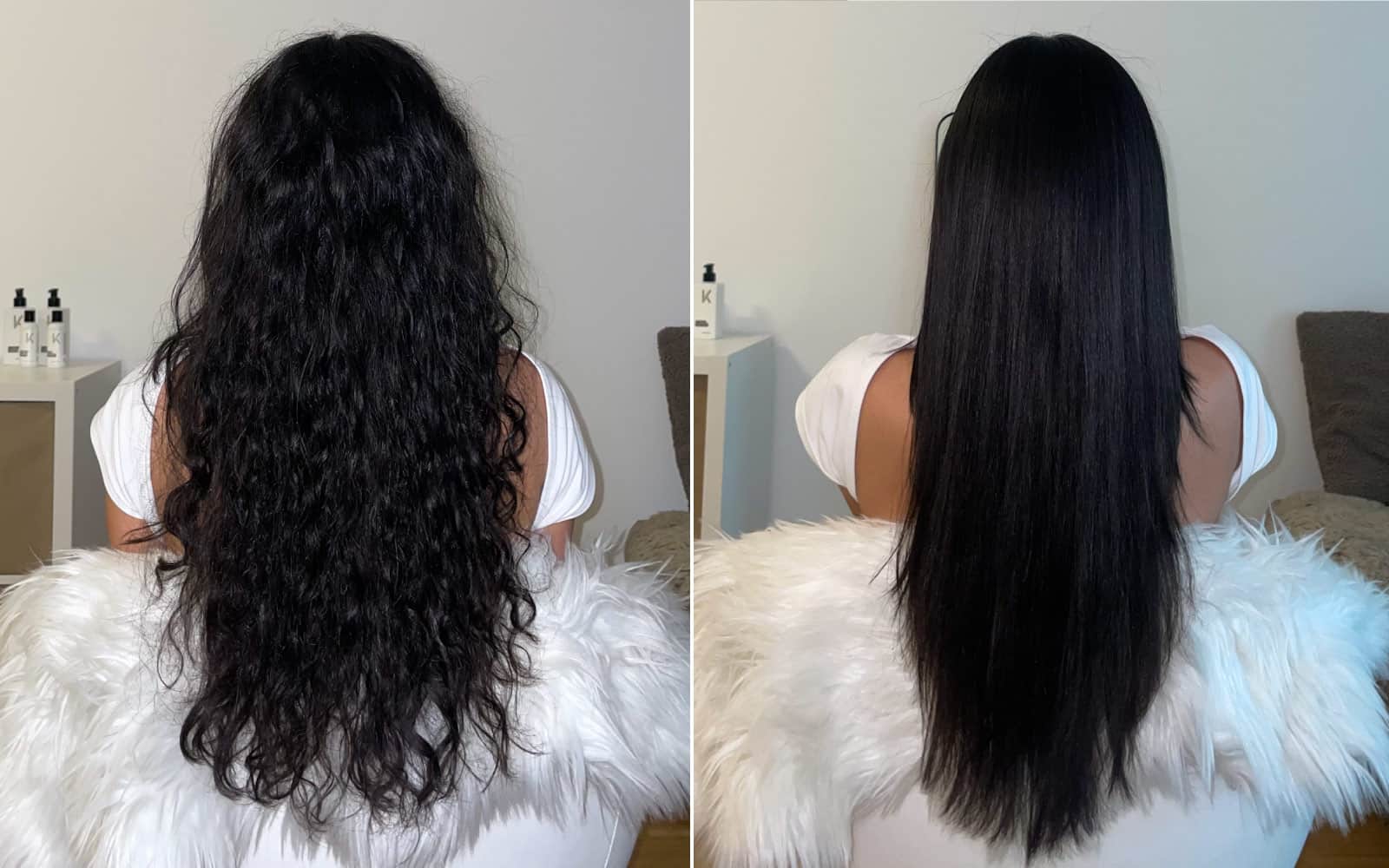
KERAZUL Keratin Treatment: My Honest 3-Month Test (Before & After)
On forums and TikTok, KERAZUL is talked about as a secret weapon against frizz. I tested the complete set — treatment plus AfterCare, so it lasts longer. The starter set with the treatment also works; AfterCare alone does not replace it. Here's my honest before-and-after, including the things that annoyed me.